🇵🇸
Gaza · International Law · UN Security Council

There Is a
Legal Path.
The Window
Is Closing.

The US has blocked accountability for Gaza 6 times using its veto. But there is a little-known UN mechanism that bypasses the veto entirely — and a narrow window to use it.

0
US vetoes on Gaza accountability Each veto blocked the world from acting. One more triggers a mechanism that changes everything.
One more veto = the trigger
US vetoes blocking Gaza accountability at the UN Security Council since October 2023
3–0
South Africa's record at the ICJ — won all three emergency orders it sought. The legal team is ready.
2yr
Until final ICJ judgment — but emergency action is possible right now, before the verdict.

The Obstacle

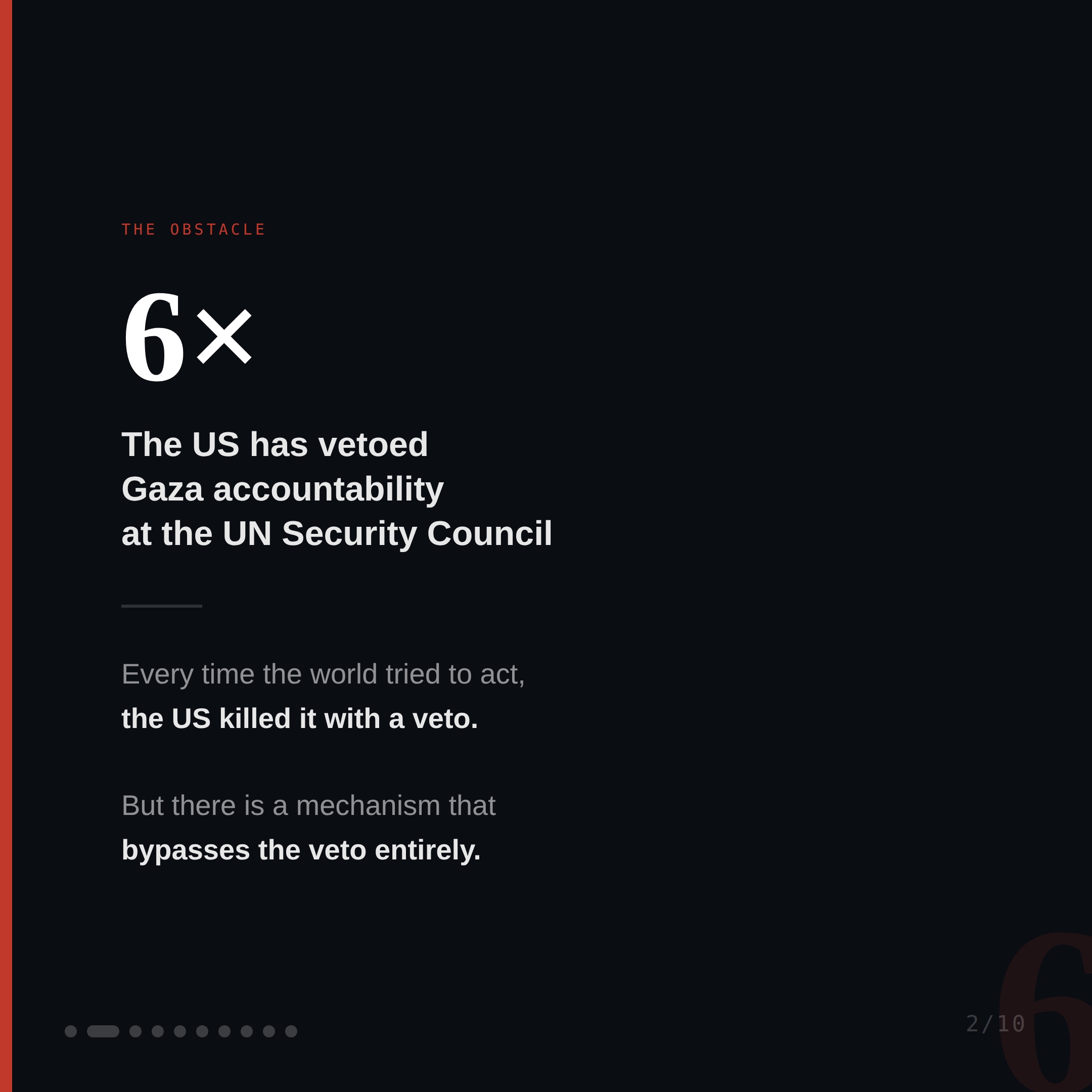
The UN is blocked.
But not powerless.

Every time the world tried to act on Gaza — to implement the ICJ's court orders, to demand a real ceasefire — the United States used its Security Council veto to kill it. The last ICJ emergency order, issued May 2024, ordered Israel to halt its Rafah offensive immediately. It was never implemented.

But the architects of the UN foresaw exactly this scenario. In 1950, they created a mechanism to ensure the General Assembly could act when the Security Council was deadlocked by a veto.

What is "Uniting for Peace"?
A 1950 UN resolution (GA Res. 377) that allows the General Assembly to convene within 24 hours and take action — including binding sanctions — when the Security Council fails due to a veto. It has been used 10 times. It helped end the Suez Crisis and helped dismantle apartheid.

The Strategy

A 6-step path
using existing law.

No new treaties required. No new institutions. Every step uses legal mechanisms that already exist — and that have worked before. What's needed is political will.

1
🇿🇦 South Africa

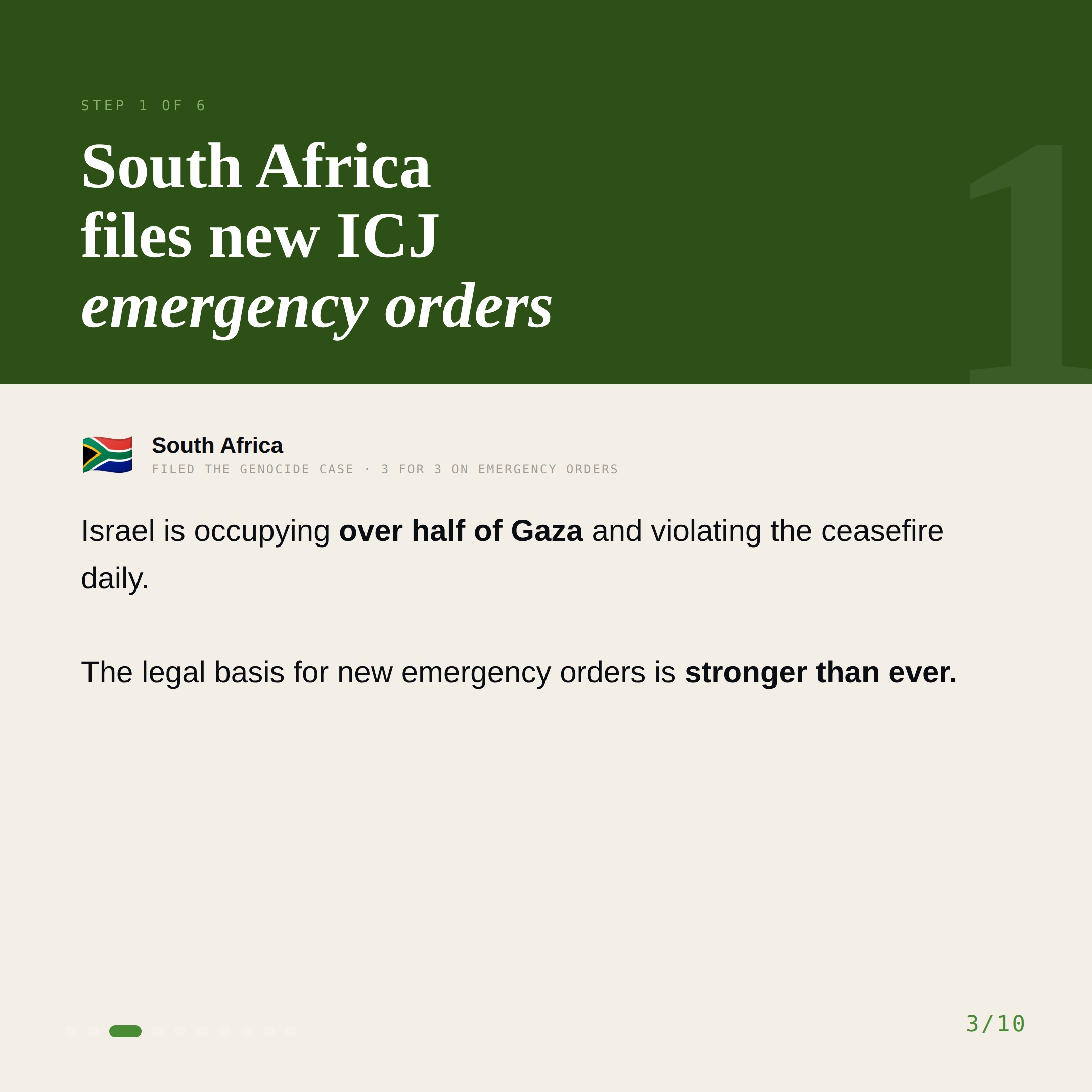
South Africa files
new ICJ emergency orders

South Africa's legal team is the strongest in the world on this case — they are 3 for 3. Israel is now occupying over half of Gaza, violating the ceasefire every day, and annexing the West Bank. The legal basis for new emergency orders is stronger than ever.

2
⚖️ International Court of Justice · The Hague

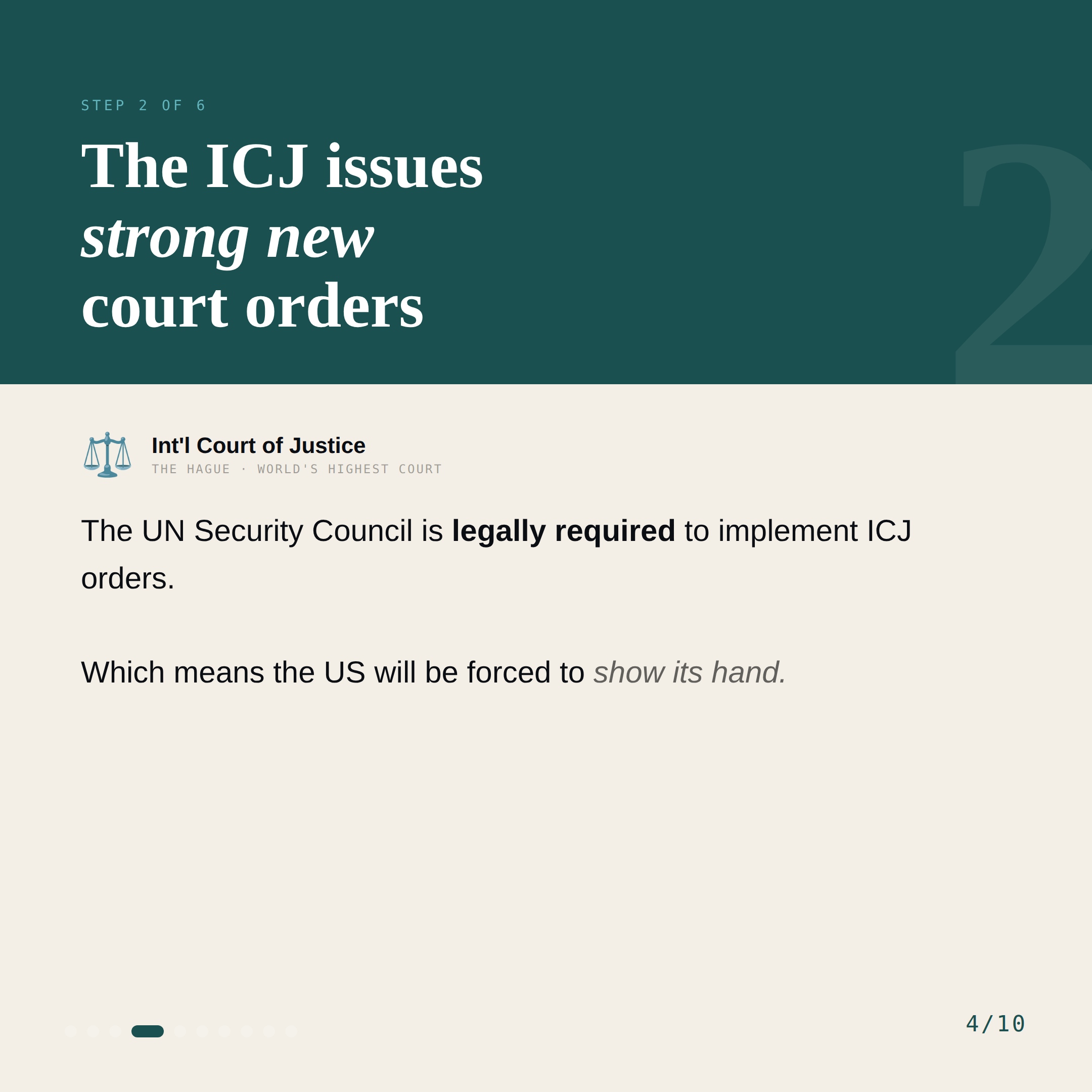
The ICJ issues
strong new orders

The ICJ issues binding emergency orders. The UN Security Council is legally obligated to implement them — which means the United States is forced to show its hand.

3
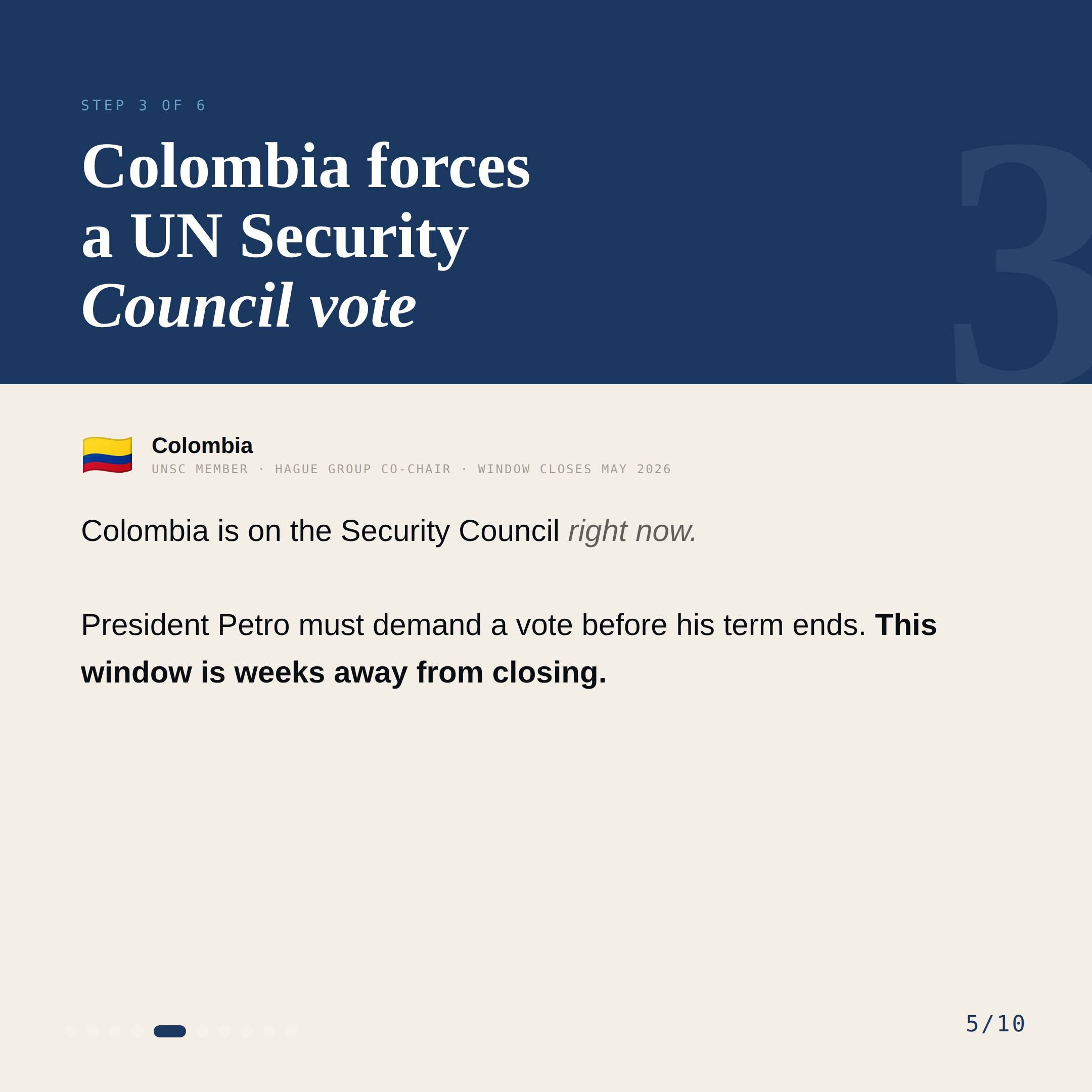
🇨🇴 Colombia · Current UNSC member

Colombia forces
a Security Council vote

Colombia — co-chair of the Hague Group with South Africa — currently sits on the Security Council. President Petro puts forward a resolution to implement the ICJ orders. This window closes in May 2026 when Petro's term ends and a right-wing successor takes over.

4
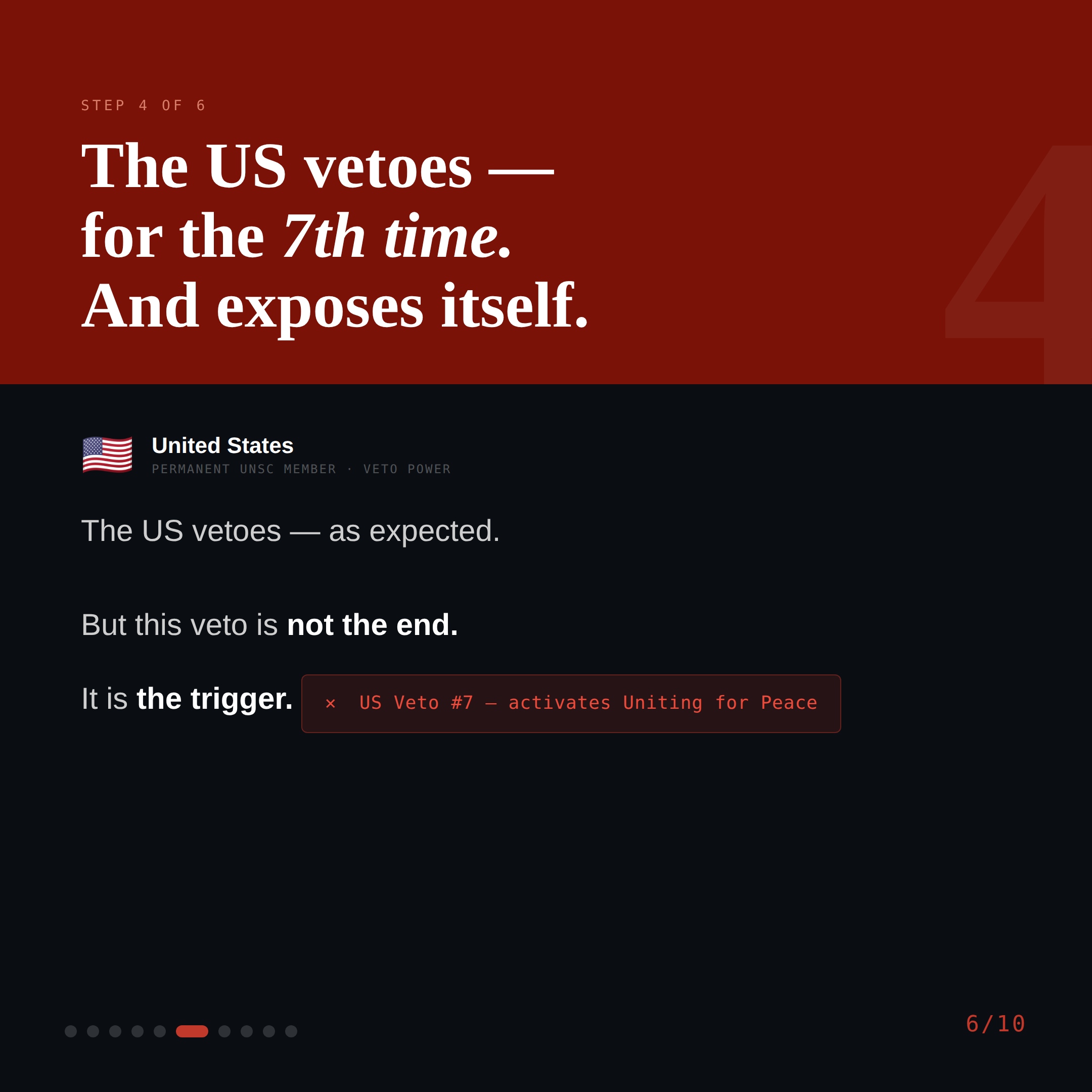
🇺🇸 United States · Permanent UNSC member

The US vetoes —
for the 7th time. And triggers everything.

As expected, the US vetoes the resolution. But this veto is not the end. It is the trigger. Seven vetoes on Gaza accountability, in defiance of an ICJ order, exposes the US before the entire world — and activates the Uniting for Peace mechanism.

✕ US Veto #7 — activates Uniting for Peace
5
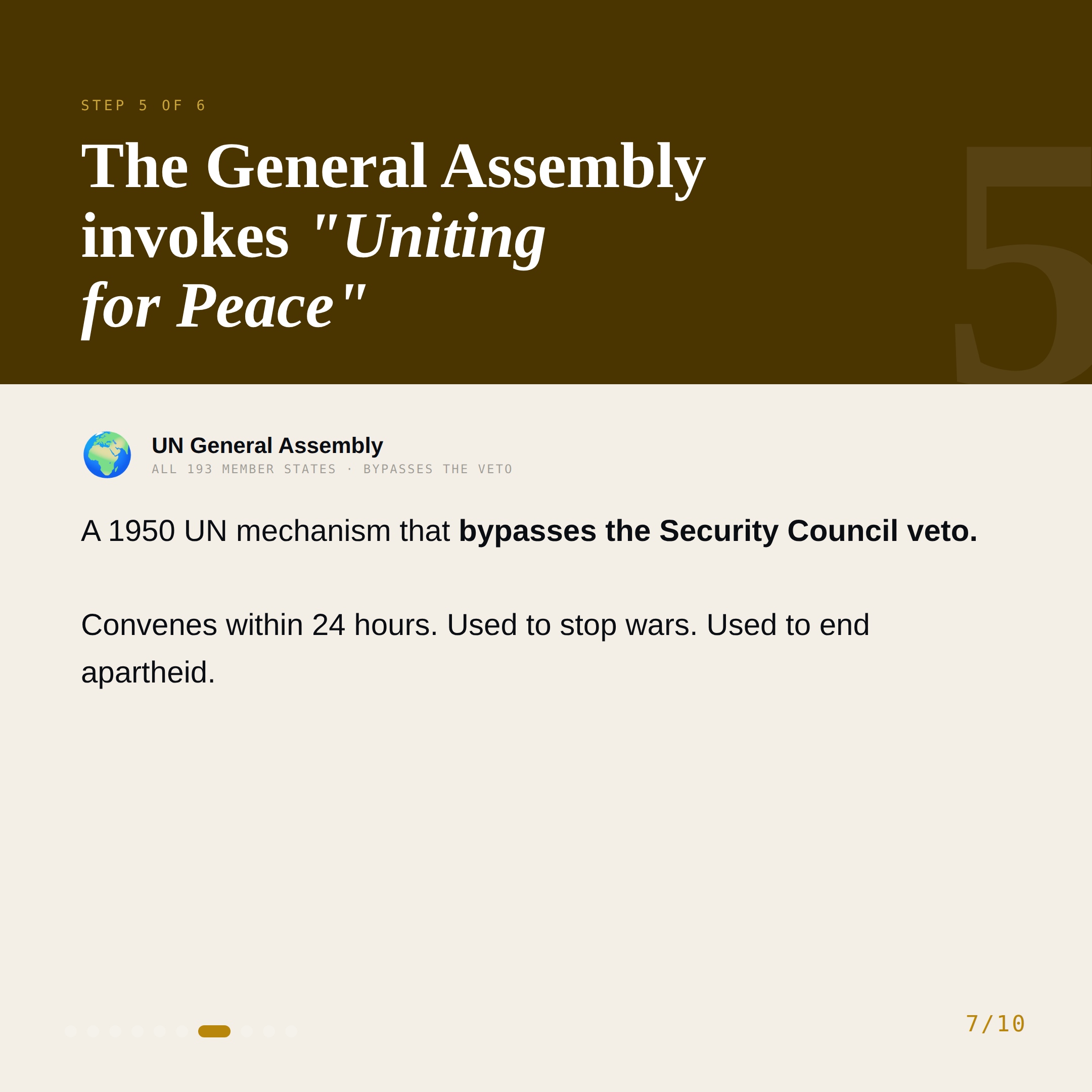
🌍 UN General Assembly · All 193 member states

The General Assembly
invokes Uniting for Peace

With the Security Council having "failed to exercise its primary responsibility," the General Assembly convenes — within 24 hours if necessary. A two-thirds majority can pass binding resolutions, including comprehensive mandatory sanctions. No veto applies.

6
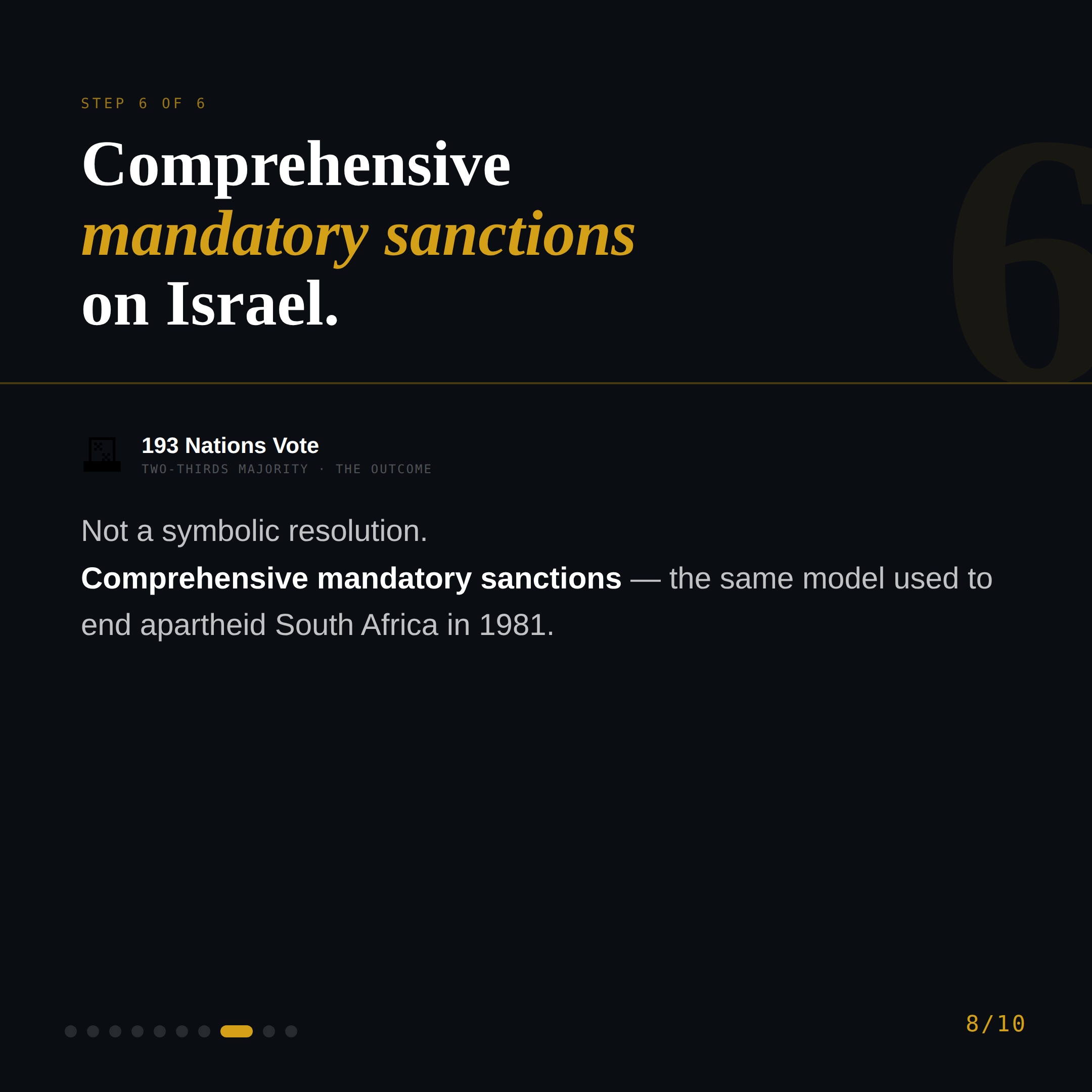
🗳️ 193 Nations Vote

Comprehensive
mandatory sanctions on Israel

Not symbolic. Not a ceasefire plea. Comprehensive mandatory sanctions — the same model used against apartheid South Africa in 1981. This also solves the WTO problem: South Africa's Trade Minister has noted that trade restrictions on Israel would require "action by the United Nations." A strong UN resolution provides that basis.

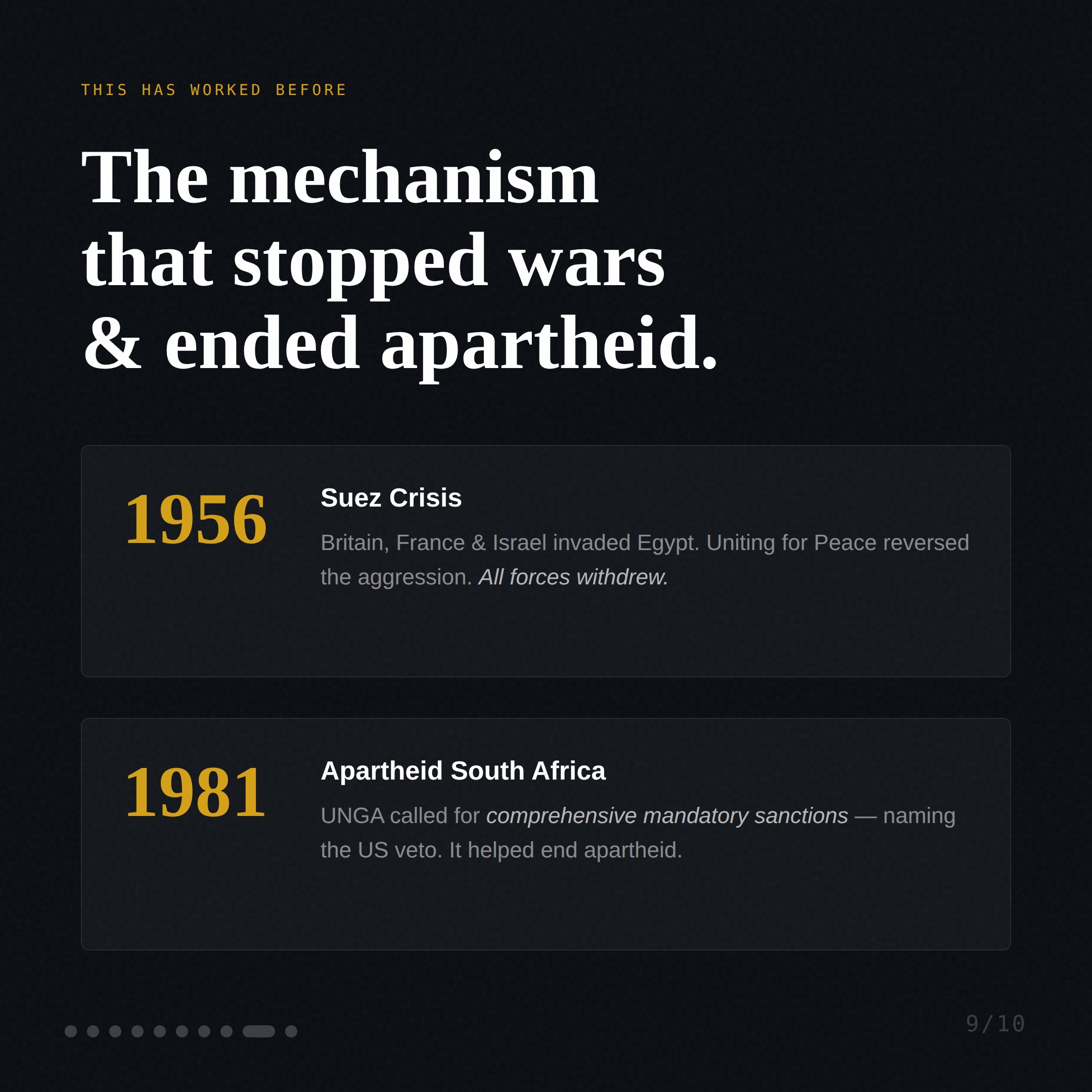
This has worked before

The mechanism
that stopped wars
and ended apartheid.

Uniting for Peace is not an untested theory. It has been used ten times in UN history. Two precedents are directly relevant to the current situation — and both succeeded.

Critics ask: what if governments ignore a UNGA resolution? But the goal is not only compliance — it is to force governments to vote on record, expose US isolation, and give civil society, BDS movements, and allied nations a legal instrument to act on.

1956
Suez Crisis
Britain, France and Israel invaded Egypt through Gaza after Nasser nationalised the Suez Canal. Uniting for Peace was invoked. The UNGA mobilised world opinion. All forces withdrew. President Eisenhower later called it a triumph of international law.
56
1981
Apartheid South Africa
The UNGA called for "comprehensive mandatory sanctions" against apartheid South Africa — explicitly naming the US veto as the reason the Security Council had failed. The resolution helped build the global coalition that ended apartheid.
81
"I like to believe that people, in the long run, are going to do more to promote peace than our governments. Indeed, I think that people want peace so much that one of these days governments had better get out of the way and let them have it."
— Dwight D. Eisenhower, after Uniting for Peace ended the Suez Crisis

Why now

Two closing windows.
Both measured in weeks.

Window 1
Global Sumud Flotilla
departs March 29
Vessels from 60–100 countries are departing in late March. Past flotillas were attacked and abducted by Israel — creating global platforms in each country. This flotilla could demand Uniting for Peace as one of its core asks, creating a perfect storm of global pressure at exactly the right moment.
Window 2 — Critical
President Petro's term
ends May 2026
Colombia is a current UNSC member with a president who has publicly committed to Palestinian rights. His successor is expected to be right-wing. The capacity for Colombia to force a vote at the Security Council disappears in May. This is a window measured in weeks, not months.

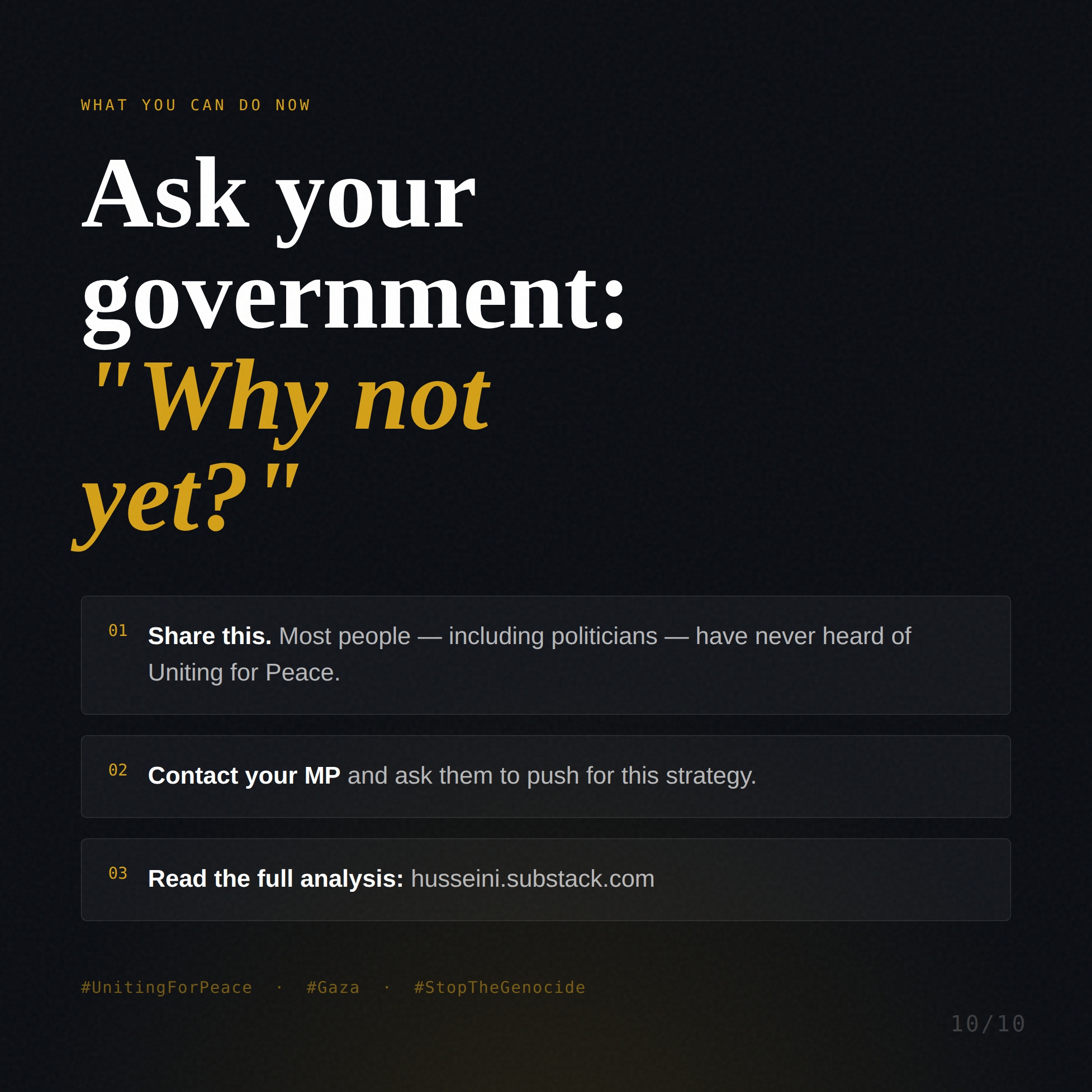
What you can do

Ask your government:
"Why not yet?"

Most parliamentarians have never heard of Uniting for Peace. Most journalists haven't covered it. Awareness is the first bottleneck. Here is what you can do right now.

01 — Share
Spread the strategy
Share this page and the carousel with your networks. Most people — including decision-makers — have never heard that this legal path exists.
02 — Contact
Write to your MP
Ask your member of parliament, senator, or representative to push their government to support a Uniting for Peace resolution. Ask them specifically: "What is your government's position on Uniting for Peace?"
Email your representative
03 — Read
Go deeper
Read Sam Husseini's full analysis in the Mail & Guardian and on Substack. Subscribe for updates as the strategy develops.
husseini.substack.com

Resources

Read the full analysis